GLP-1
Semaglutide & Tirzepatide
Things you need to know prior…
Order Supplies
1. Syringes: Please click HERE to order from amazon the necessary syringes you will need to administer the medication.
2. Alcohol wipes
3. Small sharps container: Click HERE to purchase a small sharps container from amazon.
Storage Instructions
1. Store your medication in the refrigerator.
2. Keep away from light.
3. Do not freeze.
Shipping Address
1. Medications are shipped to the shipping address on file. Once your medication is ready to ship, you'll receive a text with a tracking number from our pharmacy., and delivery typically arrives the following business day from then.
2. It is the patient’s responsibility to ensure the shipping address on file is accurate at all times.
3. Any request to change a shipping address must be submitted in writing via text message or email to the program manager prior to the scheduled appointment. Address changes submitted after the appointment will not be processed. Verbal requests are not accepted to ensure there are no errors in address change.
Administration Instructions
-
Confirm Your Dose: Check your medication vial and prescription label for the number of units prescribed. If the dose is unclear, contact your provider before injecting. Do not guess.
-
Wash Hands & Gather Supplies: Wash hands with soap and water. Gather your vial, syringe, alcohol pad, and sharps container.
-
Prepare the Vial: Inspect the medication. Clean the rubber stopper with an alcohol pad.
-
Draw Up Medication: Insert needle into vial, turn vial upside down, and draw up the exact number of units prescribed.
-
Choose Injection Site: Use a subcutaneous site (abdomen, thigh, or upper arm). Rotate sites each injection. Clean skin with alcohol and let dry.
-
Inject Medication: Pinch skin and inject at a 90-degree angle or as instructed. Inject slowly, then remove needle. Apply gentle pressure if needed. Rub the area afterwards for 5 seconds.
-
Dispose Safely: Place syringe immediately in a sharps container. Never reuse needles.
-
After Injection: Mild redness or soreness is normal. Contact your provider if you experience unusual symptoms or reactions.
-
Verify Your First Dose: Before your first injection, send our team a clear photo of the drawn-up syringe or schedule a video call so we can verify the correct number of units. Do not administer your first dose until approved.
Syringe Guide
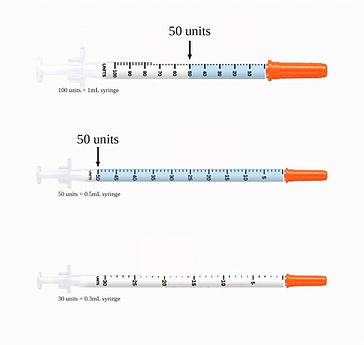
Select the syringe size you are using and refer to the example below to see what the medication should look like when drawn into the syringe.
Important: These images are examples only and do not represent your prescribed dose. Always follow the dosing instructions provided by our office and listed on your prescription vial/container.
What It Is
Semaglutide and Tirzepatide are prescription injectable medications used for medical weight management and metabolic support. These medications are administered as a once-weekly subcutaneous injection and are prescribed as part of a comprehensive medical treatment program.
How It Works
Semaglutide and Tirzepatide work by regulating appetite and hunger signals, slowing gastric emptying, increasing feelings of fullness, and improving insulin sensitivity and blood sugar regulation. Together, these effects help reduce caloric intake and support sustained weight loss when combined with proper nutrition and lifestyle habits.
Expected Benefits
Expected benefits may include reduced appetite and food cravings, improved portion control, gradual weight loss over time, and improvement in metabolic markers. Individual results may vary.
When to Use
These medications are administered once weekly on the same day each week as a subcutaneous injection. Common injection sites include the abdomen, thigh, or upper arm, and injection sites should be rotated regularly. Patients must follow the exact dosing and titration schedule provided by their medical provider and should not change their dose unless instructed.
Possible Side Effects
Common side effects may include nausea, vomiting, diarrhea, constipation, decreased appetite, bloating or indigestion, fatigue, and headache. These effects are typically mild to moderate and often improve as the body adjusts to the medication. Less common side effects may include dizziness, acid reflux or heartburn, and injection site irritation.
Contact Your Provider If You Experience
Patients should contact their provider promptly if they experience persistent or severe nausea or vomiting, inability to tolerate fluids, severe abdominal pain or pain radiating to the back, or symptoms suggestive of pancreatitis such as severe abdominal pain with vomiting. Patients should also notify their provider if they experience signs of gallbladder issues, including right upper abdominal pain, nausea, or fever. Symptoms of hypoglycemia, particularly in patients with diabetes or those using insulin, may include shakiness, sweating, dizziness, confusion, or a rapid heartbeat and should be reported immediately. Signs of an allergic reaction such as swelling or difficulty breathing require urgent medical attention so call 911.
Who Should Not Use
Semaglutide and Tirzepatide should not be used by individuals with a personal or family history of medullary thyroid carcinoma, Multiple Endocrine Neoplasia syndrome type 2, a history of pancreatitis, severe gastrointestinal disease such as gastroparesis, or known hypersensitivity to the medication or its components. These medications are also contraindicated in patients who are pregnant, trying to become pregnant, or breastfeeding.
Treatment Expectations
Weight loss with Semaglutide and Tirzepatide is gradual and varies between individuals. Side effects are most common during dose escalation periods. Ongoing follow-up appointments are required to monitor safety, tolerance, and response to treatment, and dosage adjustments may be made as clinically indicated. Optimal results are achieved when medication is combined with appropriate nutrition and lifestyle modifications.
Nutrition Guide and Exercise Videos
Click here for our GLP specific meal plan and exercise videos
Patient Responsibility
Patients are responsible for following prescribed dosing instructions, attending required follow-up appointments, and communicating any side effects or concerns promptly. Patients must maintain adequate hydration and nutrition, store medication properly, and dispose of sharps safely. Patients acknowledge that results vary and are not guaranteed.